Contenu sensible
Ce site contient du contenu sensible qui inclut des références à la violence sexuelle.
Pays
1st
Global
2nd
Governance and accountability
8th
Prevention
1st
Healing
1st
Justice
Rang partagé — un ou plusieurs pays ont le même score.
8th
Global
12th
Governance and accountability
21st
Prevention
9th
Healing
7th
Justice
Rang partagé — un ou plusieurs pays ont le même score.
11th
Global
15th
Governance and accountability
30th
Prevention
10th
Healing
9th
Justice
Rang partagé — un ou plusieurs pays ont le même score.
Analysis coming soon
Kenya is a leader in the Sub-Saharan Africa region. It is one of only four countries globally to have conducted repeat Violence Against Children and Youth Surveys (VACS) in 2010 and 2019, providing critical data to inform evidence-based policy to end violence against children and adolescents.
Progress has been substantial. In the decade between surveys, prevalence rates of childhood sexual violence among young women fell by 50%. This decline has been attributed in part to strong government leadership, including the enactment of a new Constitution in 2010 explicitly guaranteeing children’s rights to live free from violence as well as laws such as the 2022 Children Act, which bans corporal punishment in all settings. The Act also clearly defines and criminalizes online grooming of children for sexual purposes, something few countries have done comprehensively.
Kenya has also introduced key frameworks, including the 2017 guidelines on child-friendly justice, and 2018 standard procedures for the clinical management of children who experience sexual violence. The government invested in human resource development and systems strengthening, meaningful child participation, and expanded violence against children prevention services through community-level interventions. Donor-funded initiatives, such as the DREAMS program, likely contributed as well. Kenya further established a National Action Plan addressing online sexual violence against children, reinforcing its commitment to tackling emerging forms of abuse.
Leadership brings responsibility. Closing these gaps will require action like:

Partagez votre expérience, vos recherches et vos réussites en utilisant l'Index dans votre travail !
 Afrique du Sud
 Albanie
 Algérie
 Allemagne
 Angola
 Arabie saoudite
 Argentine
 Australie
 Bangladesh
 Brésil
 Burkina Faso
 Cambodge
 Cameroun
 Canada
 Chine
Chine
 Colombie
 Corée du Sud
 Côte d'Ivoire
 Égypte
 El Salvador
 Émirats arabes unis
 États-Unis
 Éthiopie
 France
 Ghana
Ghana
 Guatemala
 Inde
Inde
 Indonésie
 Italie
 Jamaïque
 Japon
Japon
 Kazakhstan
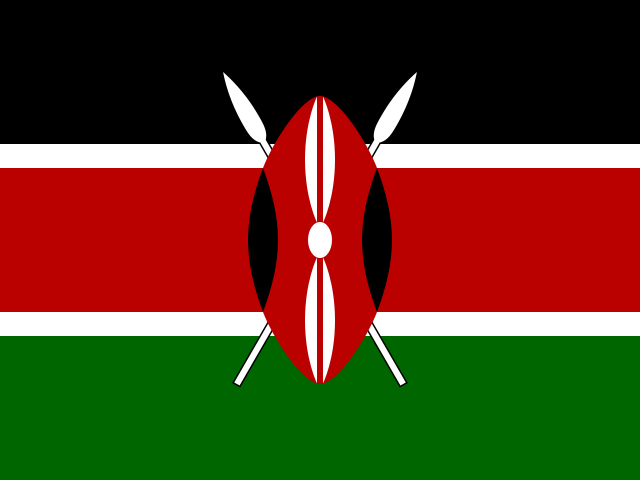 Kenya
Kenya
 Madagascar
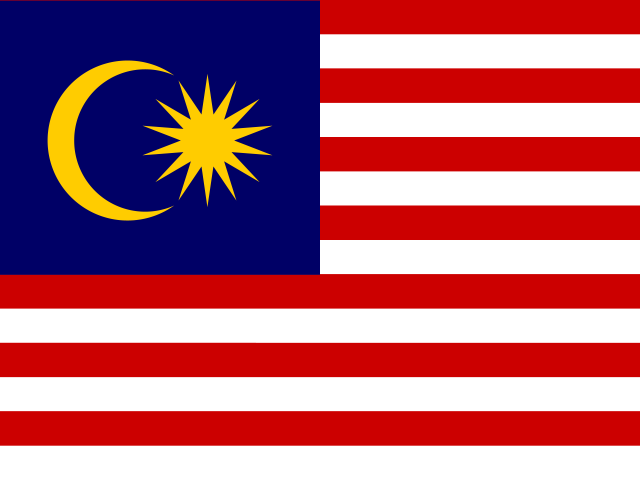 Malaisie
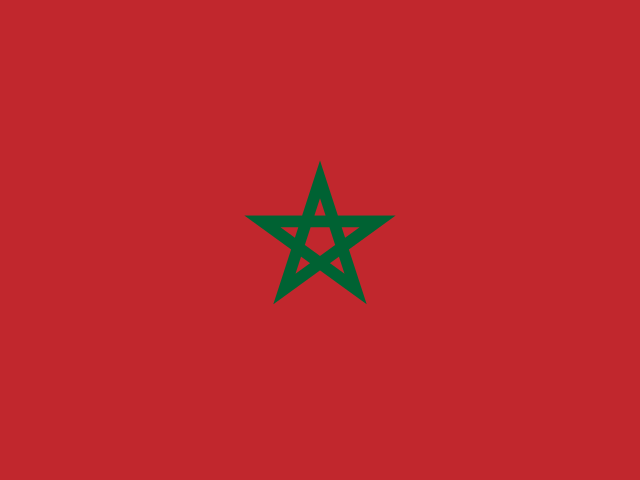 Maroc
Maroc
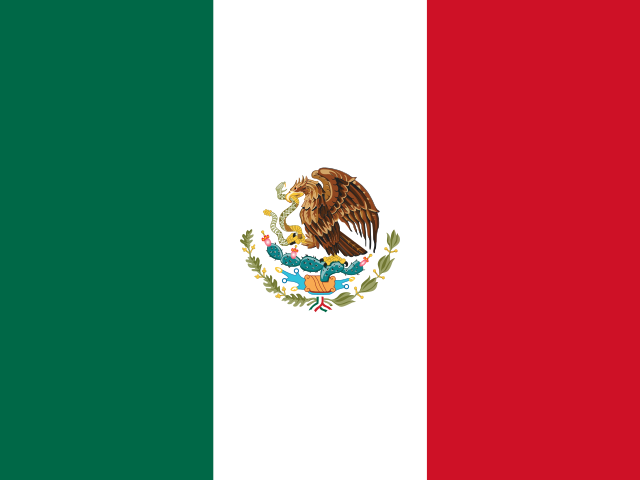 Mexique
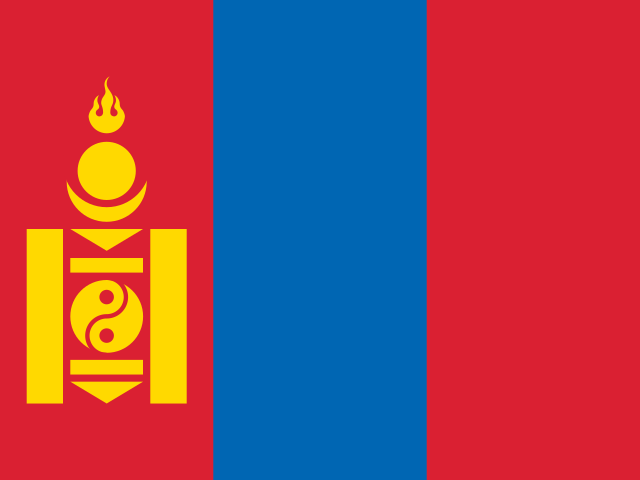 Mongolie
 Mozambique
 Népal
Népal
 Niger
Niger
 Nigéria
 Ouganda
 Ouzbékistan
 Pakistan
 Pérou
Pérou
 Philippines
 Rép. dém. du Congo
 Roumanie
 Royaume-Uni
 Russie
 Rwanda
 Serbie
 Sri Lanka
 Suède
Suède
 Tanzanie
 Thaïlande
 Türkiye
 Venezuela
 Viêt Nam