Sensitive content
This site contains sensitive content that includes references to sexual violence.
Immediate, survivor-centered medical care can prevent long-term physical harm and provide critical forensic documentation.
All countries must work harder to ensure that free, quality medical care is available and accessible for children in all regions, as no country received full credit for this indicator.
One-third of countries scored 75 out of 100, indicating that many children and adolescents have access to free high-quality health care and forensic evidence collection following sexual violence, but that gaps remain such as in access in rural areas.
Most countries scored between 25 and 50 out of 100, highlighting significant gaps such as fees, quality concerns, or coverage.
| Indicator | What it measures | Why it matters | Score range |
|---|---|---|---|
| 3.1 Medical care | Whether crisis centers or hospitals provide free examinations, testing, and treatment after sexual violence | A child who reports violence should be able to access a medical exam without cost or delay | 0–4 |
| 0 | Access to free medical care is severely limited. Services may exist only in major cities, lack evidence collection, or provide only basic testing. |
| 1 | Some free services exist but are very limited in reach or inconsistent in quality. Victims and survivors in rural areas may still face barriers. |
| 2 | Limited or partial free medical services are available in some areas and include some core components but important gaps remain. The service package is incomplete or inconsistently delivered, geographic coverage is uneven, and/or victims and survivors may be charged for certain examinations, tests or treatments. |
| 3 | Substantial access to core services but not universal. Comprehensive medical services are largely available and free at the point of use; these include medical examinations, forensic evidence collection and other related care. However, notable access gaps persist, such as in rural areas, service availability or timeliness, or indirect costs may remain. |
| 4 | Government-funded, free and comprehensive medical services are available nationwide. Victims and survivors can access clinical examinations, forensic evidence collection, sexually transmitted infection (STI) testing and treatment, post-exposure prophylaxis (PEP), emergency contraception, injury care, and follow-up services without significant barriers or out-of-pocket costs. |

A pilot screening program to connect children who experience sexual violence with response services.
via Safe Futures Hub
Use this as a guide to strengthen your advocacy requests and create targeted ‘asks’ to decision-makers within the right Ministry (for example: Foreign Affairs, Social Welfare, or Finance)
| Indicator | What it tracks | Budget-line-to target | Template language |
|---|---|---|---|
| 3.1 Access to Medical Care | Whether crisis centers and hospitals provide free examinations, testing, and treatment of children who experience sexual violence | Ministry of Health: specialized services, forensic medical units, one-stop centers, fee waivers for sexual violence against children-related care | "Allocate [amount] to establish/maintain [number] child-friendly medical examination centers with trained staff and free services for children who experience sexual violence." |
Break your ask into building blocks a Finance Ministry would recognize. Even a rough component-based estimate signals seriousness:
| Indicator | Examples of components to estimate |
|---|---|
| 3.1 Access to Medical Care | Child-friendly examination centers; forensic medical units and equipment; trained staff recruitment and retention; fee waiver administration; medical supplies |


Share your experience, research, and success stories using the Index in your work!
www.bravemovement.org/campaigns/third-richest-nation
A world without childhood violence would be $7 trillion richer. This nation isn’t real. Its wealth could be. Brave Movement's survivor-led advocacy campaign at the G20 in 2025 pressured decision makers to invest in prevention, healing and justice to create stronger, happier nations.
www.bravemovement.org/g7
By evaluating each G7 nation’s progress on vital policy measures we're drawing global attention to the global, silent pandemic of sexual violence against children. This is a crisis that undermines the G7's commitment to building secure, prosperous, and equitable societies. Kids need bold leadership and decisive action now to be safe and thrive.
www.togetherforgirls.org/en/press/a-record-breaking-event-now-governments-must-deliver
We broke the GUINNESS WORLD RECORDS™ for the most countries represented at a childhood violence summit! With 120 governments attending, this first ever Global Ministerial Conference on Ending Violence Against Children was the largest organized event to address this issue on a global scale. Most importantly, as a result, we also broke the world’s record of inaction against childhood sexual violence.

 Albania
 Algeria
 Angola
 Argentina
 Australia
 Bangladesh
 Brazil
 Burkina Faso
 Cambodia
 Cameroon
 Canada
 China
China
 Colombia
 Cote d'Ivoire
 Dem. Rep. of Congo
 Egypt
Egypt
 El Salvador
 Ethiopia
 France
 Germany
 Ghana
Ghana
 Guatemala
 India
India
 Indonesia
 Italy
Italy
 Jamaica
 Japan
Japan
 Kazakhstan
 Kenya
Kenya
 Madagascar
 Malaysia
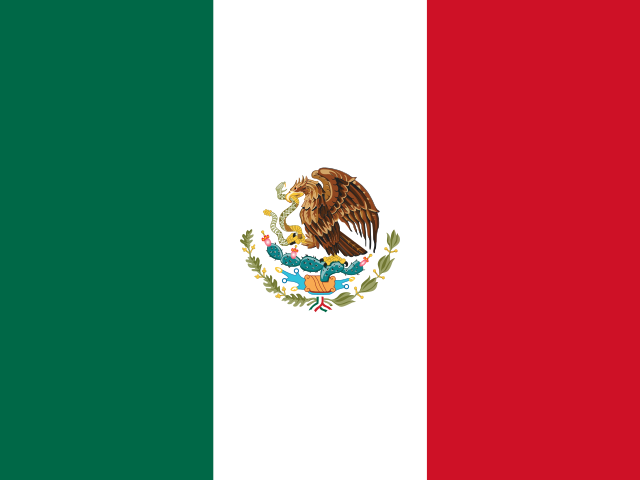 Mexico
 Mongolia
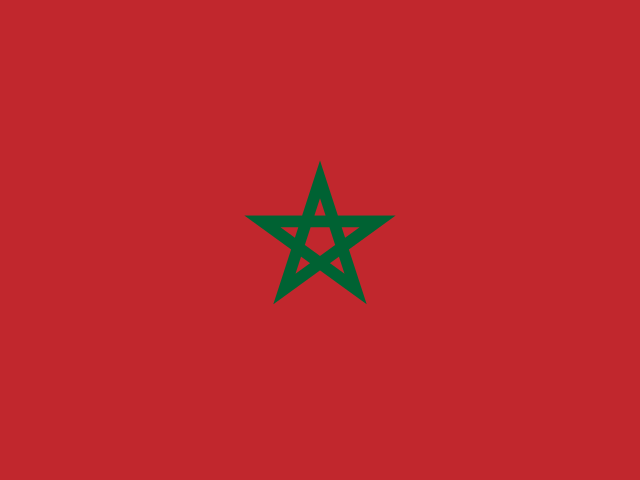 Morocco
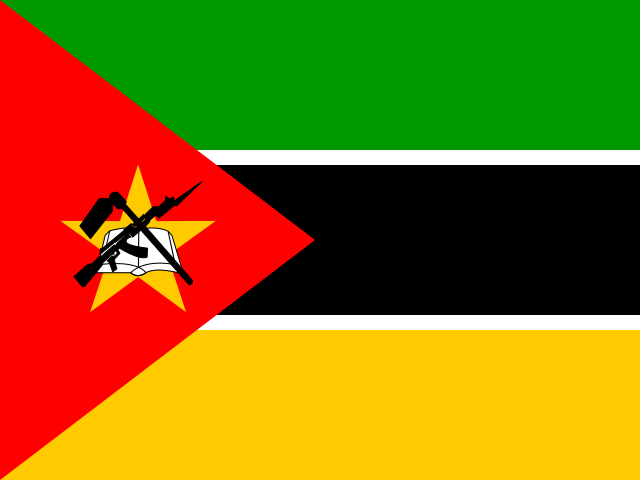 Mozambique
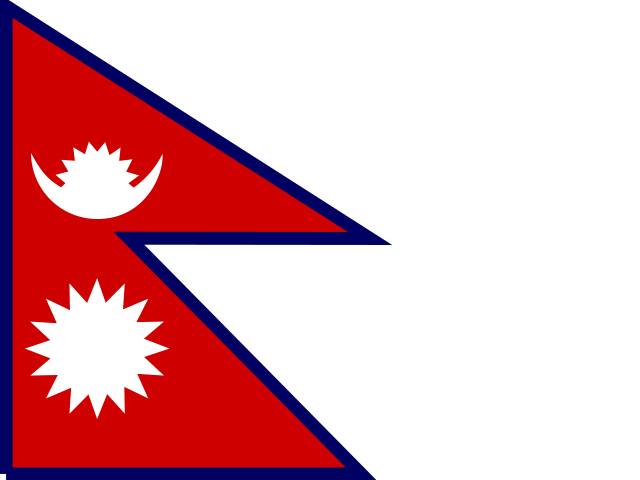 Nepal
Nepal
 Niger
Niger
 Nigeria
 Pakistan
 Peru
Peru
 Philippines
 Romania
 Russia
 Rwanda
 Saudi Arabia
 Serbia
 South Africa
 South Korea
 Sri Lanka
 Sweden
 Tanzania
 Thailand
 Türkiye
 UAE
UAE
 Uganda
 United Kingdom
 United States
 Uzbekistan
 Venezuela
 Vietnam