Sensitive content
This site contains sensitive content that includes references to sexual violence.
Indicator
This indicator is composed of seven sub-indicators (4.3.1–4.3.7). Use your country’s score on these to pinpoint the exact legal gaps to close.
| Indicator | What it measures | Why it matters | Score range |
|---|---|---|---|
| 4.3 Laws against childhood sexual violence | Seven sub-indicators covering age of consent; contact/non-contact violence; intrafamilial sexual abuse; abuse of power; trafficking; and sexual exploitation | Clear definitions close legal gaps and strengthen prosecution | 0–2 |
| 0 | Legislation establishes an age of consent for only one sex, or the age is set below 16. |
| 1 | The age of consent is 18 for both sexes but without a close-in-age exemption, or the age is between 16 and 17 for both sexes. |
| 2 | The age of consent is 18 for both sexes, with a close-in-age exemption for consensual acts between peers. |
| 0 | National legislation does not criminalize contact sexual violence against children and adolescents, or no information is publicly available. |
| 1 | National legislation criminalizes contact sexual violence only against girls and female adolescents. |
| 2 | National legislation criminalizes contact sexual violence against all children and adolescents. |
| 0 | National legislation does not criminalize non-contact sexual violence against children and adolescents, or no information is publicly available. |
| 1 | National legislation criminalizes contact sexual violence only against girls and female adolescents. |
| 2 | National legislation criminalizes non-contact sexual violence against children and adolescents. |
| 0 | National legislation does not explicitly criminalize intrafamilial sexual violence against children and adolescents, or no information is publicly available. |
| 1 | The law criminalizes intrafamilial sexual violence but is limited in scope (for example, covering only biological parents). |
| 2 | The law covers a broad range of family members and people in a parental role, including stepparents, adoptive parents, foster parents, and extended family. |
| 0 | National legislation does not explicitly criminalize sexual acts against children by people in positions of trust or authority, or no information is publicly available. |
| 1 | Legislation exists but is insufficient. It may not cover children up to the age of 18 (for example, only up to 16), does not apply to all sexual acts, applies only to people in certain settings or roles, or does not apply to both boys and girls. |
| 2 | Legislation criminalizes all sexual acts against both boys and girls up to age 18 by people in positions of trust, authority, or influence across roles and settings. |
| 0 | National legislation does not criminalize child trafficking for sexual exploitation, or no information is publicly available. |
| 1 | Legislation criminalizes some but not all elements (recruitment, transportation, transfer, harboring, and receipt). |
| 2 | Legislation criminalizes all elements of child trafficking for sexual exploitation. |
| 0 | No standalone provisions criminalizing forcing a child into sexual exploitation or purchasing sexual acts with a child, or no information is publicly available. |
| 1 | Legislation includes standalone provisions criminalizing both forcing a child into sexual exploitation and purchasing sexual acts with a child. |
Clear, protective age-of-consent laws establish boundaries that shield minors from exploitation while safeguarding against misuse.
Only one country, Rwanda, has set the age of consent at 18 for both males and females, with a close-in-age exemption of up to 3 years.
Half of countries scored 0 out of 100 because of nonexistent or inadequate age of consent laws (e.g., only applicable to girls or under age 16), while the other half received partial credit for an age of consent law of 18 without a close-in-age exception or have an age of consent of 16 or 17.
Explicitly criminalizing rape and sexual assault against children ensures these crimes are clearly defined and prosecutable.
All countries have criminalized contact sexual violence against children.
However, one country’s law only protects girls, leaving boys excluded.
Non-contact sexual violence includes causing a child to witness sexual acts or violence for sexual purposes.
All countries have criminalized non-contact sexual violence.
However, one country’s law only protects girls, leaving boys without a safeguard.
Explicitly criminalizing intrafamilial abuse ensures perpetrators cannot evade accountability because of their relationship to the child.
Almost one-third of countries explicitly criminalize intrafamilial child sexual abuse against both boys and girls by a range of family members, while a half have partial bans.
Twelve countries have not clearly prohibited intrafamilial sexual abuse.
Clearly criminalizing sexual activity against a person under age 18 by a person in a position of authority or influence ensures children are protected against misuse of power and are free to play and learn free from violence and abuse.
Nearly a third of countries have fully criminalized sexual abuse of children and adolescents by persons in a position of authority or influence in multiple settings. However, half of countries have done so only partially, while ten have not explicitly banned sexual abuse by people in positions of authority.
Aligning with international law to ban recruitment, transportation, harbouring, and transferring children for purposes of sexual exploitation ensures children are protected everywhere and strengthens cross-border accountability.
All countries have at least partially banned trafficking of children for purposes of sexual exploitation.
Two-thirds of countries have full bans
A third of countries have only partial bans or legal frameworks that are inconsistent with international standards.
Laws banning both purchasing sex acts with a child and forcing a child to have exploitative sex provide a protective legal framework through which perpetrators can be held accountable.
More than half of countries have not banned both buying and selling children for purposes of sexual exploitation (i.e., prostitution), with the legal frameworks of countries across income levels and regions falling short.
Use this as a guide to strengthen your advocacy requests and create targeted ‘asks’ to decision-makers within the right Ministry (for example: Foreign Affairs, Social Welfare, or Finance)
| Indicator | What it measures | Budget-line-to target | Template language |
|---|---|---|---|
| 4.3 Laws against childhood sexual violence (4.3.1–4.3.7) | Whether legislation comprehensively criminalizes all forms of sexual violence against children: contact, non-contact, intrafamilial, by persons in authority, trafficking, and exploitation | Ministry of Justice: legislative review and reform, legal drafting, parliamentary process, training for judiciary and prosecutors on new provisions | “Allocate [amount] for a comprehensive legislative review to ensure all forms of sexual violence against children are explicitly criminalized, including intrafamilial abuse, abuse by persons in positions of trust, and all elements of trafficking for sexual exploitation.” |
Break your ask into building blocks a Finance Ministry would recognize. Even a rough component-based estimate signals seriousness:
| Indicator | Examples of components to estimate |
|---|---|
| 4.3 Laws against childhood sexual violence | Comprehensive legislative review; legal drafting consultancy; judiciary and prosecutor training on new provisions; community legal awareness |


Share your experience, research, and success stories using the Index in your work!
www.bravemovement.org/campaigns/third-richest-nation
A world without childhood violence would be $7 trillion richer. This nation isn’t real. Its wealth could be. Brave Movement's survivor-led advocacy campaign at the G20 in 2025 pressured decision makers to invest in prevention, healing and justice to create stronger, happier nations.
www.bravemovement.org/g7
By evaluating each G7 nation’s progress on vital policy measures we're drawing global attention to the global, silent pandemic of sexual violence against children. This is a crisis that undermines the G7's commitment to building secure, prosperous, and equitable societies. Kids need bold leadership and decisive action now to be safe and thrive.
www.togetherforgirls.org/en/press/a-record-breaking-event-now-governments-must-deliver
We broke the GUINNESS WORLD RECORDS™ for the most countries represented at a childhood violence summit! With 120 governments attending, this first ever Global Ministerial Conference on Ending Violence Against Children was the largest organized event to address this issue on a global scale. Most importantly, as a result, we also broke the world’s record of inaction against childhood sexual violence.


 Albania
 Algeria
 Angola
 Argentina
 Australia
 Bangladesh
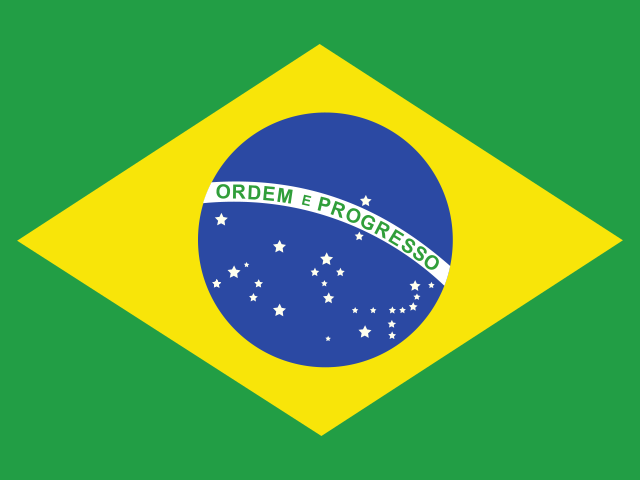 Brazil
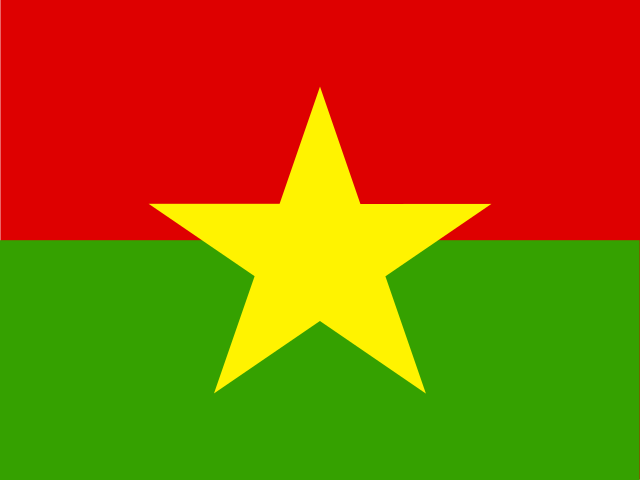 Burkina Faso
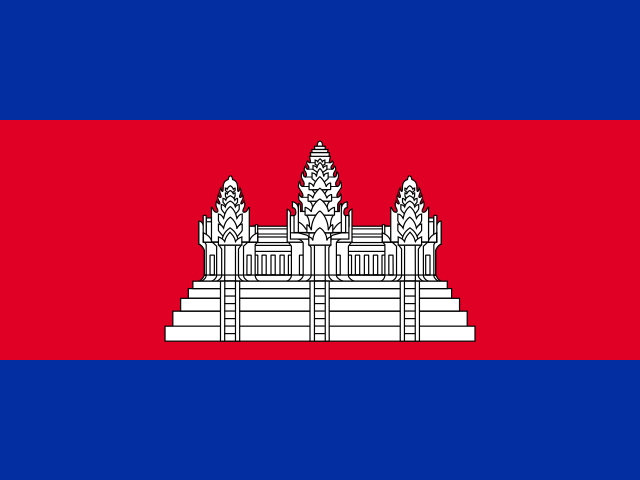 Cambodia
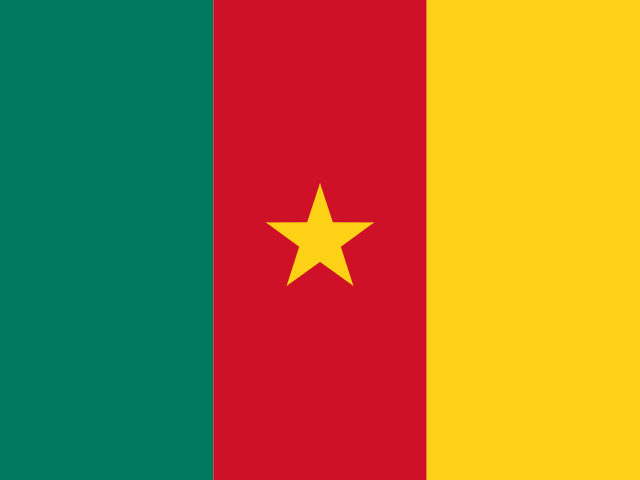 Cameroon
 Canada
 China
China
 Colombia
 Cote d'Ivoire
 Dem. Rep. of Congo
 Egypt
Egypt
 El Salvador
 Ethiopia
 France
 Germany
 Ghana
Ghana
 Guatemala
 India
India
 Indonesia
 Italy
Italy
 Jamaica
 Japan
Japan
 Kazakhstan
 Kenya
Kenya
 Madagascar
 Malaysia
 Mexico
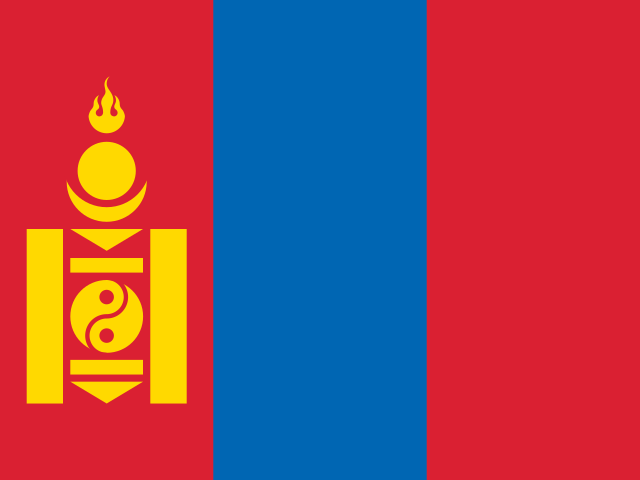 Mongolia
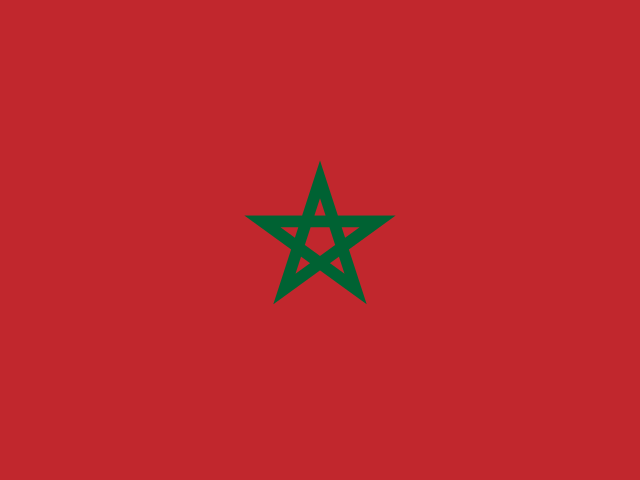 Morocco
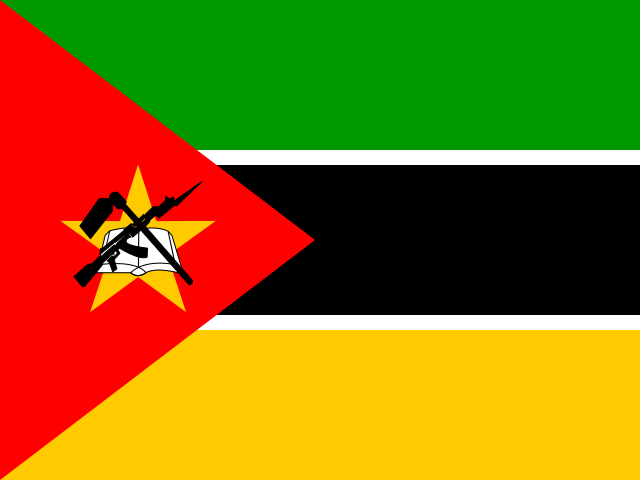 Mozambique
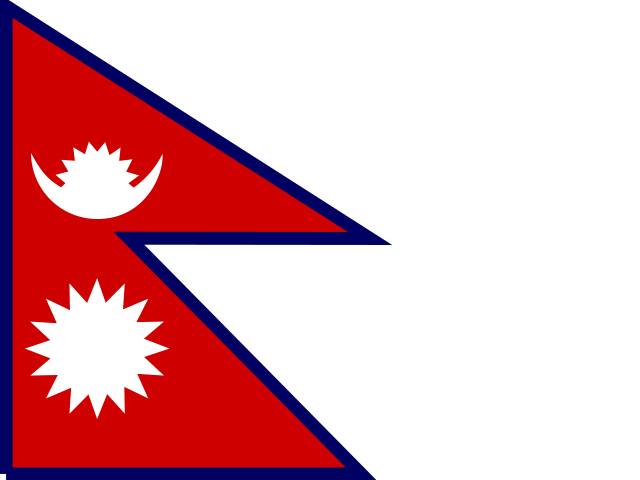 Nepal
Nepal
 Niger
Niger
 Nigeria
 Pakistan
 Peru
Peru
 Philippines
 Romania
 Russia
 Rwanda
 Saudi Arabia
 Serbia
 South Africa
 South Korea
 Sri Lanka
 Sweden
 Tanzania
 Thailand
 Türkiye
 UAE
UAE
 Uganda
 United Kingdom
 United States
 Uzbekistan
 Venezuela
 Vietnam