Sensitive content
This site contains sensitive content that includes references to sexual violence.
Indicator
Government-supported national survivor councils strengthen legitimacy, improve policy design, and help build systems that are responsive, trauma-informed, accountable, and grounded in reality.
Two countries, Australia and Germany, have fully operational government-supported National Survivors Councils. Canada has a National Survivor Council run by survivors and independent from the government. France and the United Kingdom are in the process of setting up a Council.
| Indicator | What it measures | Why it matters | Score range |
|---|---|---|---|
| 1.3.1 National Survivor Council | Whether the country has a government-supported council where survivors shape policy | Lived experience offers knowledge and context that no dataset can replace. National Survivor Councils improve both policy and accountability | 0–2 |
Formal and recurring child participation pathways strengthen accountability and ensure prevention and response efforts reflect young people’s real needs.
More than a third of countries, including leaders in each region, have established formal mechanisms for regular child and youth participation in child protection or violence prevention policies.
Nearly half have included children in ad-hoc or informal mechanisms.
In 12 countries, no evidence of children's inclusion in decision-making processes related to violence was found.
| Indicator | What it measures | Why it matters | Score range |
|---|---|---|---|
| 1.3.2 Child engagement in policy-making | Whether formal mechanisms exist for children and adolescents to influence child protection or violence prevention policies | Children should have a voice in the systems designed to protect them | 0–2 |
| 0 | No government-supported National Survivor Council exists, or no information is publicly available. |
| 1 | The government has committed to establishing a National Survivor Council. |
| 2 | A government-supported National Survivor Council exists, providing a formal channel for survivors to shape national policy. |
| 0 | No formal or informal mechanisms exist for children and adolescents to influence national child protection or violence prevention policies, or information is not publicly available. |
| 1 | Informal or ad-hoc mechanisms exist, but they are not regular or well-documented; or a formal mechanism/body exists, but it is unclear whether children are engaged specifically on child protection or violence prevention issues. |
| 2 | Formal, recurring child engagement processes exist with structured opportunities for children to influence policy. |
Use this as a guide to strengthen your advocacy requests and create targeted ‘asks’ to decision-makers within the right Ministry (for example: Foreign Affairs, Social Welfare, or Finance)
| Indicator | What it tracks | Budget-line-to target | Template language |
|---|---|---|---|
| 1.3.1 National Survivors Council | Whether a government-supported council exists where survivors shape policy | Lead ministry for child protection / social welfare: council establishment, operational costs, secretariat support, participant stipends | “Ensure budget allocation for the establishment and sustained operation of a National Survivors Council, including honoraria for council members, secretariat support, training, meeting costs, and mental health support.” NSC Establishment Guidelines pg. 10. |
| 1.3.2 Child engagement in policy-making | Whether formal mechanisms exist for children to influence child protection policies | Ministry of Social Welfare / Youth: child participation mechanisms, youth advisory bodies, consultation processes | “Allocate [amount] to establish and maintain formal child and adolescent participation mechanisms in national child protection policy-making, including age-appropriate consultation processes.” |
Break your ask into building blocks a Finance Ministry would recognize. Even a rough component-based estimate signals seriousness:
| Indicator | Examples of components to estimate |
|---|---|
| 1.3.1 Survivors Council | Secretariat staff (1–2); quarterly meetings; council member honoraria; secretariat support; travel and accommodation; safeguarding provisions, including mental health support |
| 1.3.2 Child engagement | Youth advisory body operations; age-appropriate consultation design; facilitator training; child-friendly materials |


Share your experience, research, and success stories using the Index in your work!
www.bravemovement.org/campaigns/third-richest-nation
A world without childhood violence would be $7 trillion richer. This nation isn’t real. Its wealth could be. Brave Movement's survivor-led advocacy campaign at the G20 in 2025 pressured decision makers to invest in prevention, healing and justice to create stronger, happier nations.
www.bravemovement.org/g7
By evaluating each G7 nation’s progress on vital policy measures we're drawing global attention to the global, silent pandemic of sexual violence against children. This is a crisis that undermines the G7's commitment to building secure, prosperous, and equitable societies. Kids need bold leadership and decisive action now to be safe and thrive.
www.togetherforgirls.org/en/press/a-record-breaking-event-now-governments-must-deliver
We broke the GUINNESS WORLD RECORDS™ for the most countries represented at a childhood violence summit! With 120 governments attending, this first ever Global Ministerial Conference on Ending Violence Against Children was the largest organized event to address this issue on a global scale. Most importantly, as a result, we also broke the world’s record of inaction against childhood sexual violence.
 Albania
 Algeria
 Angola
 Argentina
 Australia
 Bangladesh
 Brazil
 Burkina Faso
 Cambodia
 Cameroon
 Canada
 China
China
 Colombia
 Cote d'Ivoire
 Dem. Rep. of Congo
 Egypt
Egypt
 El Salvador
 Ethiopia
 France
 Germany
 Ghana
Ghana
 Guatemala
 India
India
 Indonesia
 Italy
Italy
 Jamaica
 Japan
Japan
 Kazakhstan
 Kenya
Kenya
 Madagascar
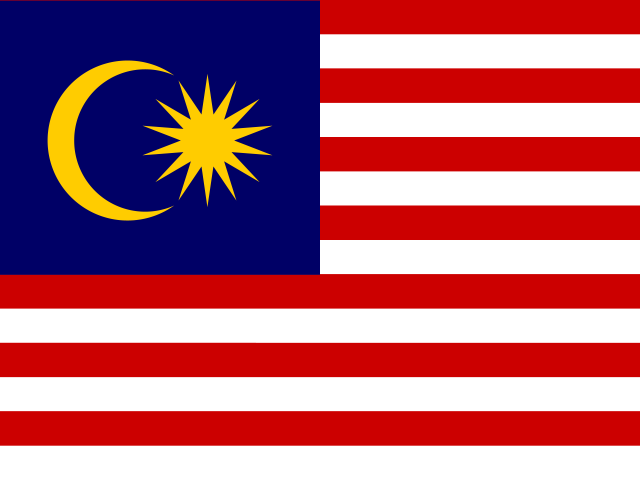 Malaysia
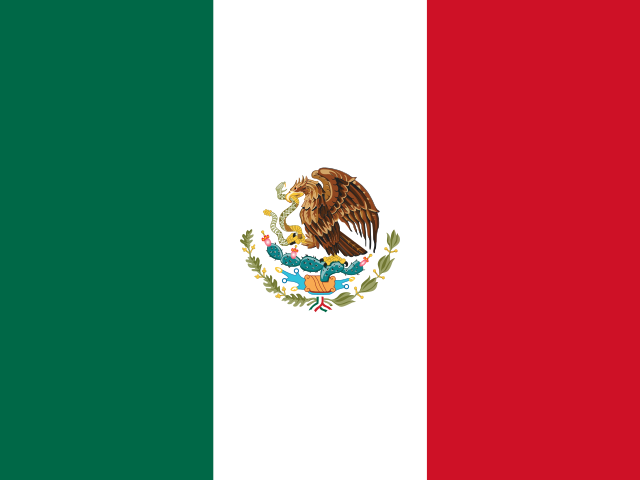 Mexico
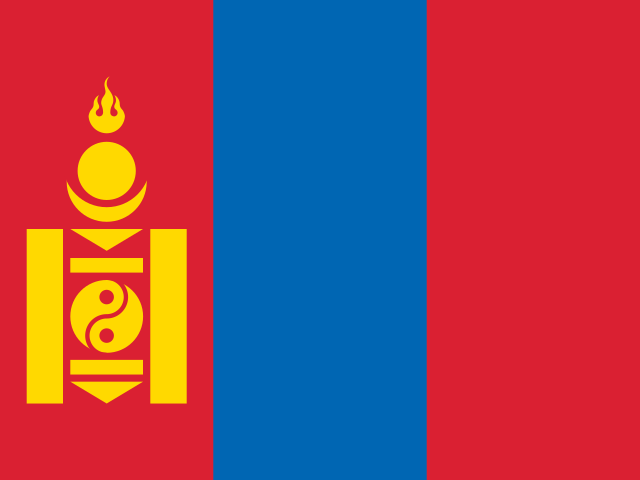 Mongolia
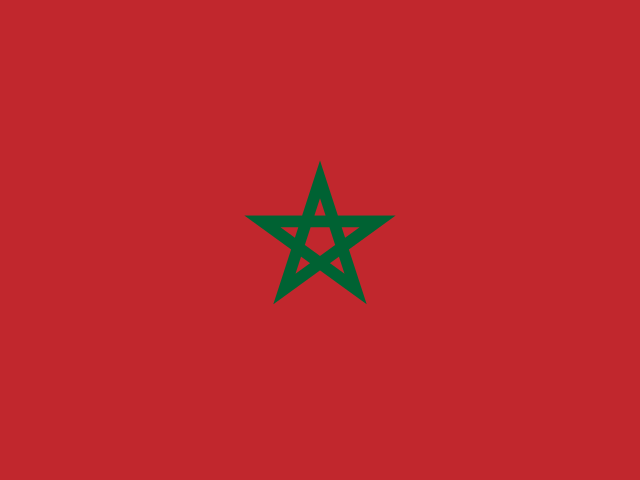 Morocco
 Mozambique
 Nepal
Nepal
 Niger
Niger
 Nigeria
 Pakistan
 Peru
Peru
 Philippines
 Romania
 Russia
 Rwanda
 Saudi Arabia
 Serbia
 South Africa
 South Korea
 Sri Lanka
 Sweden
 Tanzania
 Thailand
 Türkiye
 UAE
UAE
 Uganda
 United Kingdom
 United States
 Uzbekistan
 Venezuela
 Vietnam