Sensitive content
This site contains sensitive content that includes references to sexual violence.
Despite a relatively strong score in the 2026 Out of the Shadows Index, advocates urge Australia to take further action to build more comprehensive protection systems
GENEVA, May 18, 2026 — Australia ranks first out of 60 countries globally in the 2026 Out of the Shadows Index, a new global benchmark assessing countries based on the minimum laws, policies, and services necessary to address sexual violence against children and adolescents. The Index, researched and developed by Economist Impact with advocacy led by Together for Girls, assesses 60 countries representing 83% of the world’s children across 4 pillars: Governance and Accountability (coordinated national action); Prevention (child protection); Healing (high-quality care); and Justice (strong legal systems). The Index does not measure prevalence of such violence.
“Behind every data point in this Index is a child whose life has been shaped by violence,” said Elly Vaughan, who led the research at Economist Impact. “Our research points to the stark finding that no country is doing enough to prevent and respond to sexual violence against children and teens. Across all 60 countries evaluated, our research exposes critical gaps in child protection systems — including top-ranked nations like Australia, where plans and policies to prevent and respond to child and adolescent sexual violence remain incomplete.”
Australia’s score on the four pillars are as follows:
“While Australia’s top ranking reflects strong legal frameworks and support services, the Index measures the minimum standard – the floor, not the ceiling. Survivors and victims in regional and remote areas of Australia experience significant barriers to accessing medical and other services, among other gaps. The Australian government must use the Out of the Shadows Index as a roadmap for action to end sexual violence. Only when action is being taken consistently across all indicators are children going to be safe,” said Professor S. Caroline Taylor, Co-founder, Brave Movement and Founder, Professor Caroline Taylor Foundation. “We must also urgently establish a Royal Commission on Intrafamilial Sexual Violence, to address the weak implementation of existing policies, regional disparities in protection, and the persistent neglect of abuse within families, where stigma and silence continue to limit prevention, healing, and justice.”
Despite strengths and a relatively strong ranking, gaps remain. Together for Girls, the advocacy lead for the Out of the Shadows Index, identified recommendations for the Australian government to improve its systems, including but not limited to:
With a global commitment to eliminate childhood sexual violence by 2030 — and no country currently on track — the findings underscore the need for sustained prevention-focused investment and continued strengthening of survivor-informed policymaking.
PRESS CONTACTS
For questions about the research, contact: media@economist.com
For questions about how to use the Index to drive advocacy and engagement efforts, contact: Christy Delafield christy@togetherforgirls.org
Notes to editors:
Support and resources: If you or someone you know has experienced sexual violence, support is available. Find resources by country.
About the Out of the Shadows Index: The Out of the Shadows Index is the global benchmark of national governments' efforts to prevent and respond to sexual violence against children and adolescents. The Index is researched and developed by Economist Impact, with advocacy and engagement efforts led by Together for Girls.
It ranks 60 countries across 6 regions, which together are home to 83% of the world’s children. The Index scores countries across 23 indicators, covering laws, policies, programs, and services that a government should have in place to end sexual violence against children and adolescents in their country.
First launched in 2019 and updated in 2022, the 2026 edition marks its third iteration, and the 4th will be launched in 2027.
About the Out of the Shadows Index Australia Data: There are 5.7 million children in Australia, 1.2% of the of the region's total population under the age of 18.
Australia’s first-ever Child Maltreatment Study of 2023 showed a high national prevalence of sexual violence against girls (37%) and boys (19%). The study shed light on important changes over time, with a decline in sexual violence perpetrated by adults (12%) and an increase in perpetration by adolescents (19%), among youth ages 16-24. While the prevalence remains high, encouraging declines in sexual violence against children by adults show the impact of protective policies and programs even as increasing sexual violence by adolescents must be addressed.
Australia’s National Strategy to Prevent and Respond to Child Sexual Abuse (2021–2030) and First Commonwealth Action Plan (2021-2024) serve as a roadmap for change, outlining clear activities, roles, and responsibilities, and costs. These plans were developed in consultation with children and youth.



 Albania
 Algeria
 Angola
 Argentina
 Australia
 Bangladesh
 Brazil
 Burkina Faso
 Cambodia
 Cameroon
 Canada
 China
China
 Colombia
 Cote d'Ivoire
 Dem. Rep. of Congo
 Egypt
Egypt
 El Salvador
 Ethiopia
 France
 Germany
 Ghana
Ghana
 Guatemala
 India
India
 Indonesia
 Italy
Italy
 Jamaica
 Japan
Japan
 Kazakhstan
 Kenya
Kenya
 Madagascar
 Malaysia
 Mexico
 Mongolia
 Morocco
 Mozambique
 Nepal
Nepal
 Niger
Niger
 Nigeria
 Pakistan
 Peru
Peru
 Philippines
 Romania
 Russia
 Rwanda
 Saudi Arabia
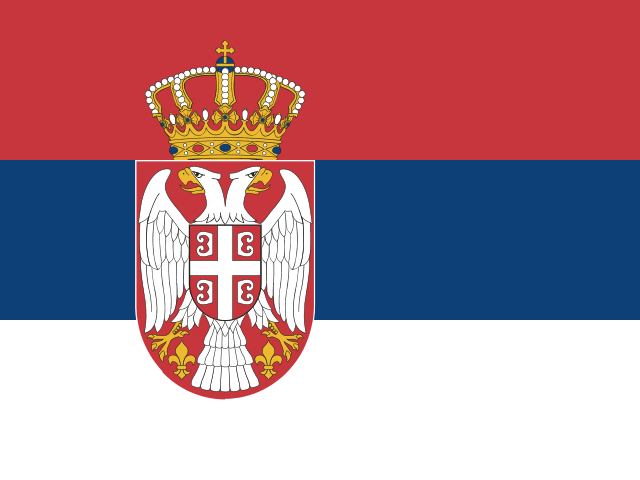 Serbia
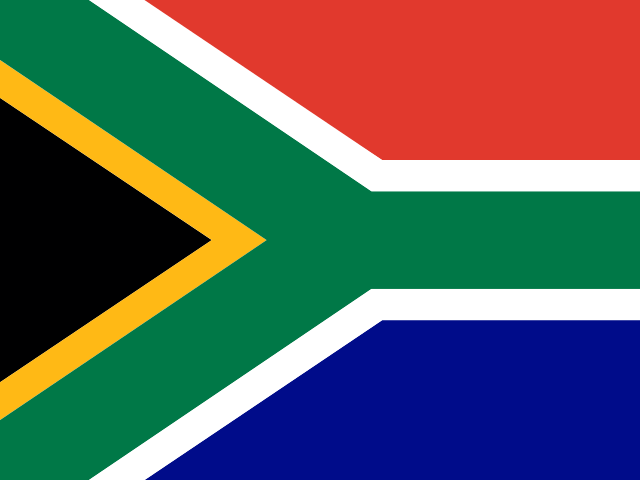 South Africa
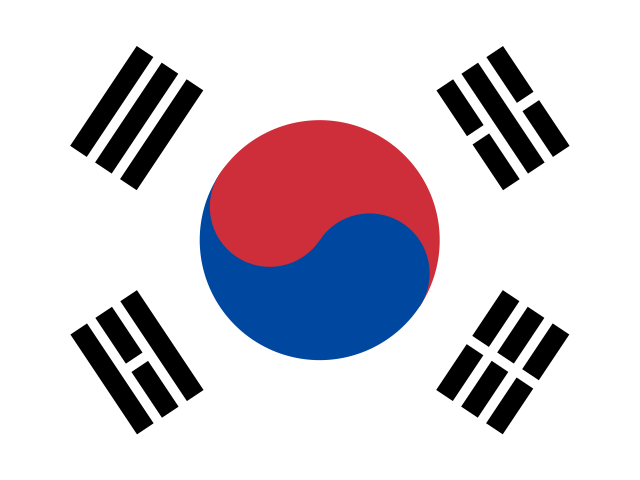 South Korea
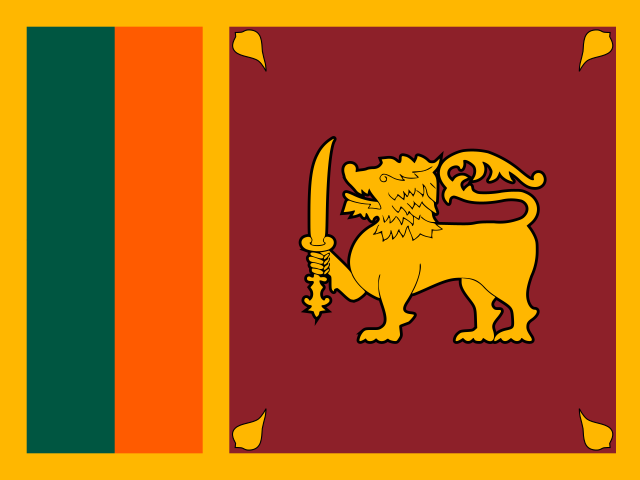 Sri Lanka
 Sweden
 Tanzania
 Thailand
 Türkiye
 UAE
UAE
 Uganda
 United Kingdom
 United States
 Uzbekistan
 Venezuela
 Vietnam